
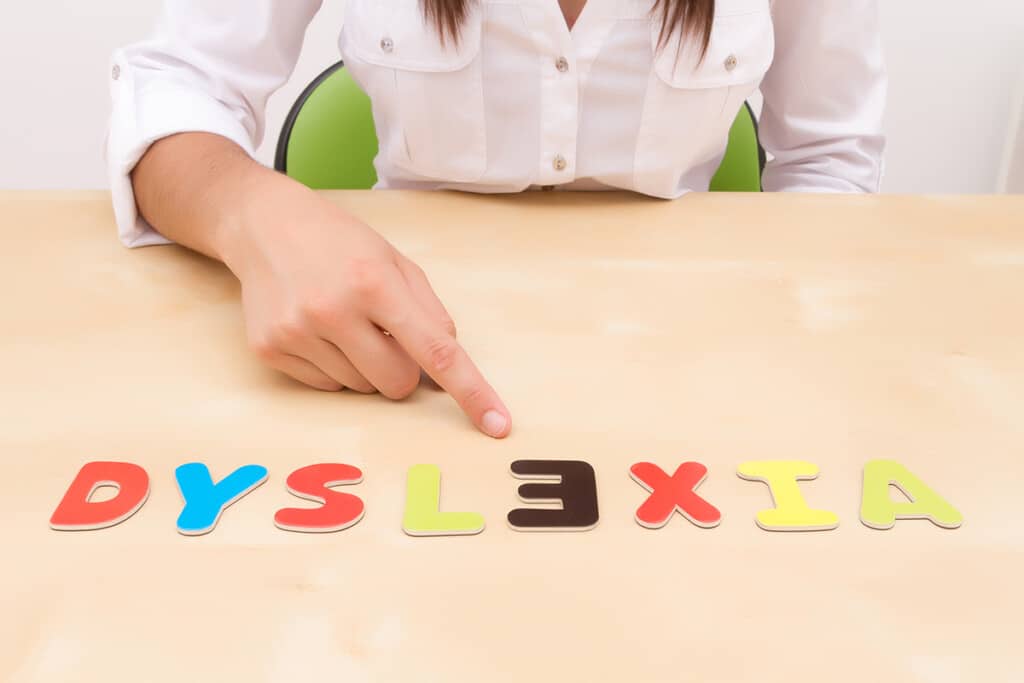
Does your child have dyslexia? Statistics, strategies, and debunking a few myths.
October was Dyslexia Awareness Month. Here at Engage the Brain, we aim to spread dyslexia awareness every month. We have a robust team of Learning Specialists who focus on students diagnosed with dyslexia employing the gold standard for instruction, the Orton-Gillingham method.
Many people are familiar with the term dyslexia and perhaps have some vague notion of its meaning. No, people with dyslexia do not see words backwards as if reflected in a mirror! More on dispelling myths later.
The International Dyslexia Association defines it this way: Dyslexia is a neurological condition caused by a different wiring of the brain. Students have difficulties with accurate and/or fluent word recognition and poor spelling and decoding. There is no cure! And there is no relationship to intelligence. Dyslexics are neither more nor less intelligent than the general population. Statistics are difficult to pinpoint, but according to LD Online between 5% and 15% of the population – 14 to 53 million children and adults – have dyslexia. Some sources even report up to 20%.
Success Stories
Like with many other challenges life throws at us humans, there are success stories for people to look to for inspiration. The following notable people reportedly had or have dyslexia:
Thomas Edison: he was a bright fellow!
F. Scott Fitzgerald: he could tell us stories about dyslexia
Stephen Spielberg: Close Encounters of the Dyslexic Mind
Charles Schwab: Invest in good instruction
(Sorry for the bad jokes!)
Intervention Approaches
The good news is that there are researched-backed approaches to teach reading skills to dyslexic students. There must be a systematic and explicit understanding of language structure and must include phonics. The Orton-Gillingham (OG) approach is one such method. According to the Academy of Orton-Gillingham Practitioners and Educators’ website, OG is a direct, explicit, multisensory, structured, sequential, diagnostic, and prescriptive way to teach literacy when reading, writing, and spelling does not come easily to individuals.
5 Myths about Dyslexia
1. MYTH: Dyslexics have defective brains
Not true. But nor do they special brains. They have different brains. The International Dyslexia Association (IDA) cautions against parents imparting too much emphasis on celebrity success stories, which could be damaging if a child does not meet certain expectations.
Early identification and intervention with appropriate accommodations along with the use of assistive technology ought to be the focus.
2. MYTH: Writing letters backwards is a sign of dyslexia
Some children do write letters backwards and some do not. Younger children tend to do this with b and d and or p and q. Understood.org recommends if your child is still reversing letters by the end of first grade, it may signal a need for an evaluation.
3. MYTH: Dyslexia can be out grown
Simply put this is false. Longitudinal studies have proven phonological challenges persist into adulthood. With proper instruction dyslexics can learn to read effectively but often continue to read slowly and not automatically.
4. MYTH: Dyslexia cannot be identified until third grade
Professionals with training in diagnosis can identify precursors to dyslexia as early as five years old. Definitive determinations can be made as soon as a child struggles to learn to read, write, and spell. The University of Michigan says evaluating a family history for dyslexia or other language-based disabilities can help identify vulnerable children even before they begin formal schooling.
5. MYTH: Dyslexia is a vision problem
Dyslexia is a language-based learning difference. Students with dyslexia are no more likely to have vision problems than those without it. Glasses or contact lenses may bring the text into focus, but they will not cure dyslexia.
Putting it all together
There are many wonderful resources to turn to if you think your child may have dyslexia. Early diagnosis and employment of a prescriptive, multi-sensory, and systematic approach to teaching phonics such as the Orton-Gillingham method is the best course to pursue. Engage the Brain has a team of trained experts that can answer any of your questions. Debunking the myths and arming yourself with information is the best course of action. As the IDA says, the environment a parent creates often determines whether a learning difference becomes a disability or a talent.
Contact us to learn more about our remote learning services.